

On This Page
How to Test Pool Water: A Complete Guide
Learning how to test pool water is one of the most important skills for any pool owner. Without regular testing, chemical levels become unbalanced, water can turn cloudy, algae may grow, and swimmers may be exposed to unhygienic conditions.
The good news is that with the right pool equipment, testing is quick, simple, and accurate. This complete guide explains why you should test your pool water, what you need to check, how often to do it and the step-by-step process using both test strips and liquid test kits.
Step-by-Step: How to Test Pool Water
Ready to learn how to test pool water effectively? Here’s the process:
If your pool’s pH level is too high, you can lower it using chemicals such as hydrochloric acid, muriatic acid, sodium bisulfate, or sodium bisulphate. For low pH, use soda ash or sodium carbonate to raise it. Always follow applicable dosage rates based on your pool volume.
If chlorine levels or free chlorine levels are too low, add chlorine products to increase sanitiser levels. If excess chlorine is present, use a chlorine remover or allow time for natural dissipation to bring free chlorine levels back to a safe range.
Completely emptying the pool should only be considered with professional advice, as it can significantly impact pool water chemistry.


Why Should I Test My Pool Water?
Regular pool water testing is essential for two reasons:
- To maintain proper pool water chemistry, so you know which pool chemicals to add.
- To keep your swimming pool sparkling clear and healthy for swimmers.
If left unchecked, contaminated water can:
- Harm filtration and pool equipment.
- Trigger eye and skin irritation.
- Encourage algae or bacteria growth.
- Cause infections and worsen asthma or allergies if dust mites and other allergens accumulate.
By testing at the right frequency, pool owners can avoid costly repairs, enjoy a crystal-clear clean pool, and create a safe swimming experience for the whole family.
Understanding Pool Water Chemistry
Balanced pool water depends on monitoring these core chemical levels:
- pH Levels (7.2 – 7.8): Keeps water comfortable and ensures chlorine works effectively.
- Free Chlorine (1 – 3 ppm): Kills bacteria, prevents algae, and keeps water safe.
- Combined Chlorine (< 0.2 ppm): Indicates used-up chlorine. High levels suggest chlorine is no longer effective.
- Calcium Hardness (200 – 400 ppm): Protects surfaces and equipment. Too low causes corrosion; too high causes scaling. Calcium hardness levels should be kept within the optimum level range to prevent damage to pool walls and equipment. A calcium hardness increaser, such as calcium chloride, is used to raise low calcium hardness levels.
- Total Alkalinity (100 – 200 ppm): Acts as a pH stabiliser and helps prevent pH fluctuations. Maintaining proper alkalinity levels is crucial for balanced pool water chemistry. Pool alkalinity can be increased using an alkalinity increaser, commonly sodium bicarbonate, and it’s important to follow applicable dosage rates based on pool volume.
- Cyanuric Acid (30 – 50 ppm): Stabilises chlorine against UV rays. Too much cyanuric acid can lead to chlorine lock.
- Total Dissolved Solids (< 1,500 ppm): Measures material dissolved in water. High TDS can cause cloudy pool water and reduce chlorine effectiveness.
Keeping these components in balance not only extends the life of your equipment but also ensures every swim is safe and refreshing.

Extending the Life of Your Pool Water Balance
To avoid frequent rebalancing:
- Use a mattress protector equivalent for pools – in this case, a pool cover – to minimise debris and diluted chemical levels from rain.
- Invest in high-quality HyClor Pool Equipment to keep water cycling efficiently.
- Always add chemicals evenly across the surface, not through the skimmer.
- Test your pool water more frequently after heavy rain or big pool parties.
Keep Your Pool Crystal Clear with HyClor
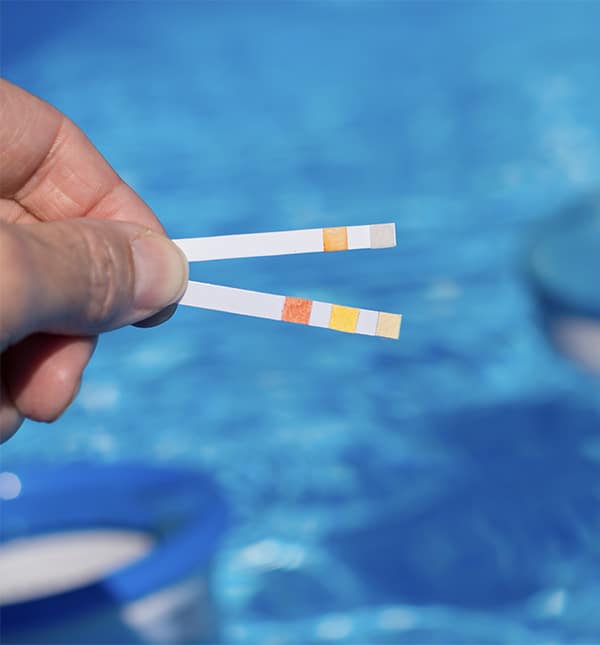
Maintaining ideal pool water balance doesn’t have to be difficult. By testing weekly with quality pool test strips or a liquid test kit, you can:
- Prevent algae, bacteria, and cloudy water.
- Protect your pool equipment.
- Enjoy a consistently clean, crystal-clear pool.
FAQs
Ready to take the guesswork out of pool care?
Explore HyClor’s full range of test kits and pool chemicals today, or visit your local Bunnings who will make sure that you have the highest quality water possible by using our top-of-the-line products.
With the right tools and routine, you’ll keep your pool healthy, safe, and ready for swimming all year round!