


On This Page
How to Measure Pool Chemicals: Understanding the Importance of Balanced Pool Chemistry and Its Impact on Pool Maintenance
Nothing says “summer in Australia” like a backyard pool glistening in the heat — unless, of course, it’s the moment you realise it’s gone cloudy right before the weekend barbecue.
Learning how to measure pool chemicals properly isn’t just about keeping the water looking good. It’s about safety, comfort, and protecting your pool from costly damage. Think of your pool as a mini science experiment that never ends. The trick is keeping every ingredient — chlorine, pH, alkalinity, calcium, and stabiliser — working in harmony.
Once you understand the basics, maintaining ideal pool chemistry becomes second nature.
In this Hy-Clor how-to, you’ll learn exactly how to measure pool chemicals: the tools you need, the right testing method, how to interpret results, and the fixes that keep your water clear and safe.
Understanding the Importance of Pool Chemicals
Pool chemicals are the unsung heroes of clean, safe swimming water. They quietly take care of the hard work so you can focus on swimming, not skimming. Without them, your pool would quickly turn from crystal clear to green and slimy.
Here’s why they matter:
- Sanitation: Chlorine and other sanitisers kill harmful microorganisms such as bacteria, algae, and viruses. Even the cleanest-looking pool can harbour nasties if your sanitiser levels are too low.
- Comfort: Balanced pH levels keep the water gentle on your skin, eyes, and swimwear. If your pH is off, you’ll feel it — literally.
- Equipment protection: Balanced chemistry prevents corrosion of metal parts, scaling on tiles, and clogging of filters. A well-maintained pool lasts longer and costs less to run.
- Water clarity: When everything’s balanced, your pool water sparkles, reflects the sky, and smells fresh rather than like a public pool locker room.
Getting your chemistry right also saves water. Balanced pools need fewer drain-and-refill cycles, which helps the environment and your water bill.
Tools and Equipment Needed to Measure Pool Chemicals
Before you dive into testing, make sure you’ve got the right gear. Measuring pool chemicals doesn’t need a lab coat — just the proper tools and a little consistency.
Here’s your testing toolkit:
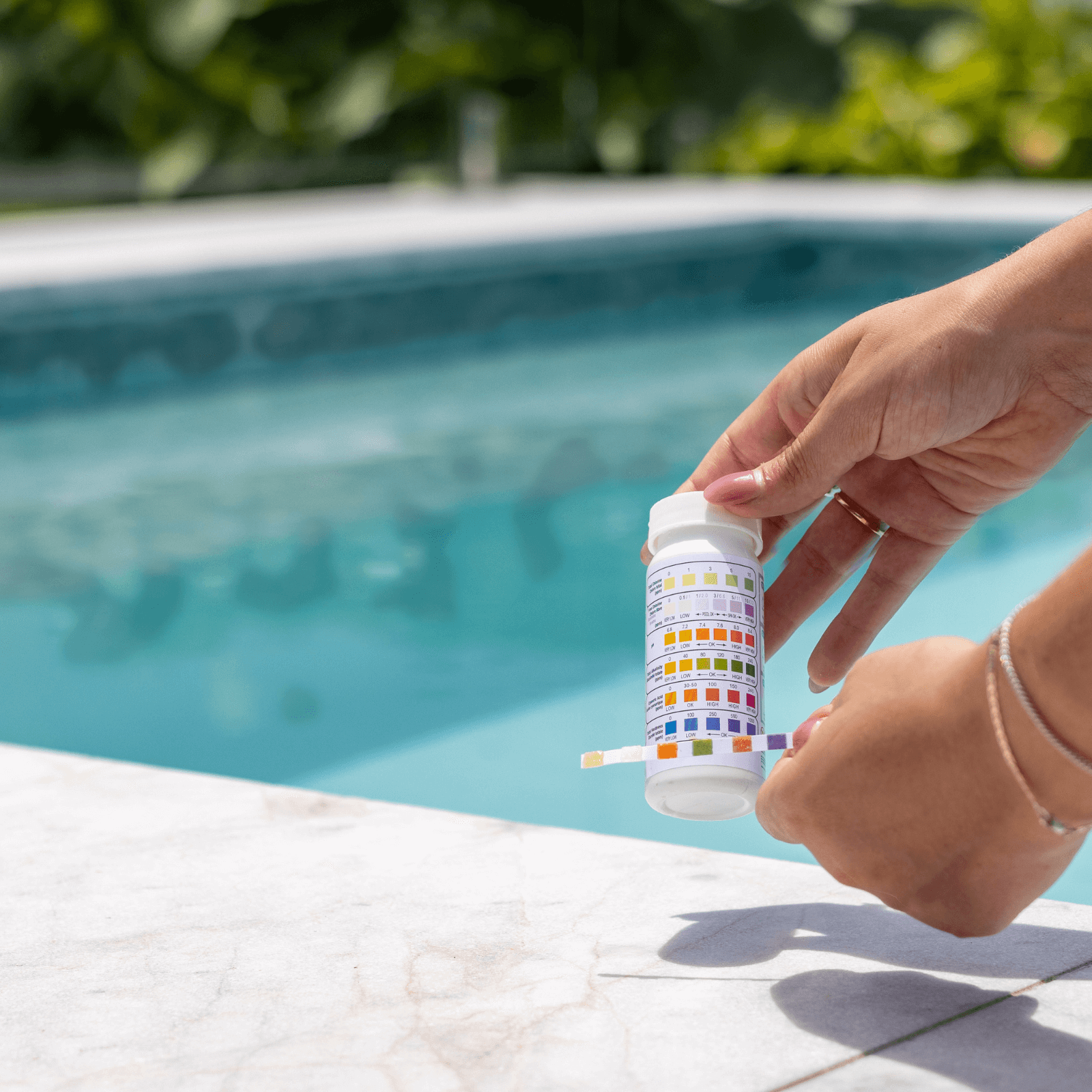
- Test kits: Liquid-based test kits offer the most precise readings, while test strips are great for a quick check. Many pool owners keep both handy.
- Digital pool testers: Ideal if you prefer less guesswork. These handy gadgets give instant readings for pH, chlorine, and alkalinity.
- Measuring cups or containers: Always use clean, clearly labelled containers. A kitchen cup will do in a pinch — just don’t use it for cooking later!
- Protective gear: Gloves, goggles, and a bit of common sense go a long way when handling concentrated chemicals.
When to test:
- At least once a week during regular use
- After heavy rain or strong winds (rainwater can dilute your chemicals)
- After lots of swimmers or a pool party
- When topping up the pool
- Whenever the water turns cloudy or smells strongly of chlorine
If you’ve just set up your pool or changed water recently, test every couple of days until the levels stabilise.
Tip: Hy-Clor offers free water-testing kiosks in the pool isle of every Bunnings store across the country. Simply bring a sample of your pool water, and the system will analyse it for you. Prefer DIY? The Hy-Clor mobile app lets you log results and get tailored advice in seconds.
Step-By-Step Process for Measuring Pool Chemicals
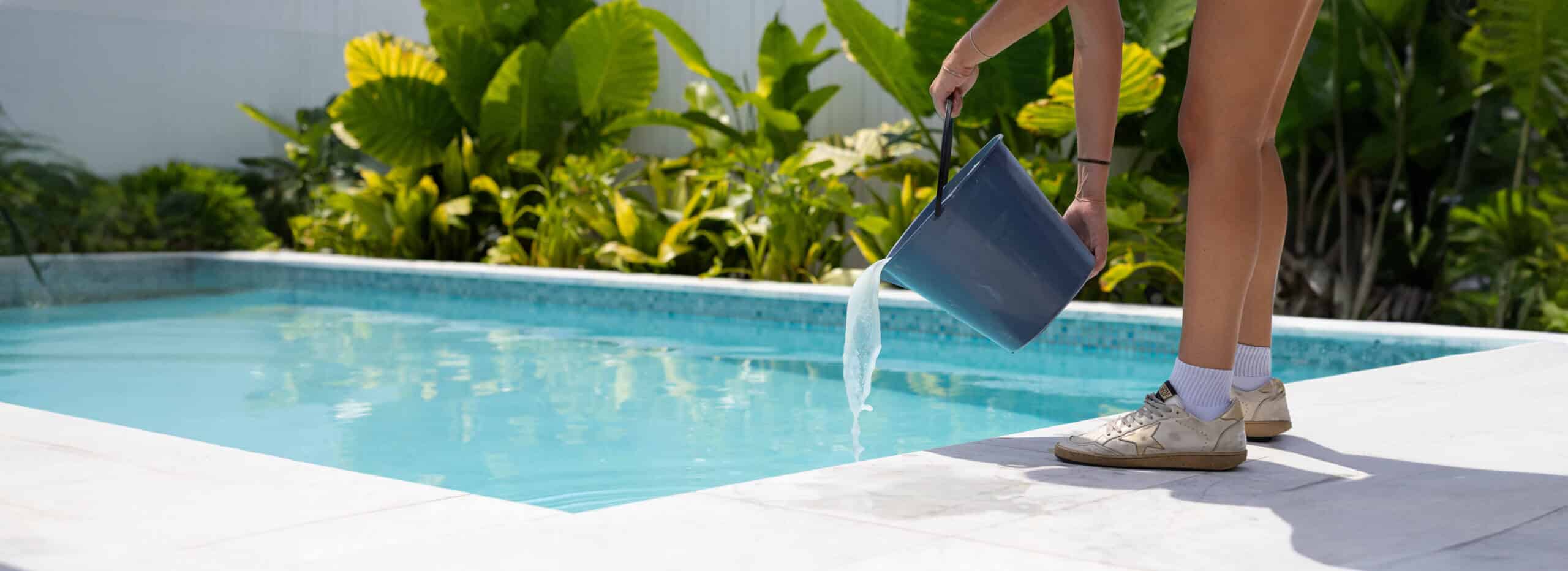
So, how to measure pool chemicals accurately? Follow these three steps and you’ll feel like a pool pro in no time.
Common Mistakes to Avoid When Measuring Pool Chemicals
Even the most diligent pool owners slip up occasionally.
Here are some common traps to dodge:
Each mistake can cost you hours of extra work (and a few extra dollars). Testing, measuring, and patience are your best tools.


Tips for Maintaining Balanced Pool Chemistry
Consistency is the secret to stress-free pool care.
Here’s how to keep your water balanced week after week:
- Test regularly: Weekly is ideal, but during summer heatwaves, every few days keeps you ahead of problems.
- Shock the pool: Give it a powerful chlorine boost every few weeks or after heavy use to destroy contaminants.
- Use stabilisers wisely: A stabilised chlorine keeps your sanitiser from burning off too quickly.
- Keep filters clean: Dirty filters can throw off readings and waste chemicals.
- Store chemicals correctly: Keep them sealed, dry, and in a cool spot out of direct sun.
- Check expiry dates: Old or clumpy chemicals lose strength.
Pro Tip: Check out Hy-Clor’s video demonstrations for a visual walkthrough on testing, balancing pool water, and much more — it’s a quick way to see pool maintenance in action and build confidence.
FAQs About How to Measure Pool Chemicals
Simplify Pool Maintenance With Hy-Clor’s Expert Tools
Keeping your pool healthy doesn’t have to feel like chemistry class. With regular testing, accurate measurement, and the right products, you can spend less time maintaining and more time enjoying your pool.
Hy-Clor makes it easy with a trusted range of high-quality chemicals, digital testers, and cleaning tools designed for Aussie conditions. Their free water testing kiosks and mobile app take the guesswork out of balancing your water, offering instant, personalised recommendations to keep your pool clean and crystal clear.
Explore Hy-Clor’s range of pool care products or reach out to their friendly team for expert advice — because simple, reliable pool maintenance starts with Hy-Clor.