

Hard water can creep up on pool owners without much warning. If you’ve spotted a faint white line around your pool tiles or felt rough patches underfoot, you might be dealing with hard water. Left untreated, it only gets worse; cloudy water that won’t clear, filters that clog too quickly, and scale that clings stubbornly to every surface.
High calcium hardness is the culprit, and it’s more than a cosmetic issue. It can damage your equipment, drive up chemical costs, and even leave swimmers with irritated skin.
In this Hy-Clor guide, you’ll learn what pool water hardness is, why it matters, the common causes, and most importantly, the steps you can take to lower calcium hardness and keep your water balanced.
What Is Pool Water Hardness and Why Is It Important?
When pool pros talk about “hardness,” they are referring to the amount of calcium dissolved in your pool water.
The sweet spot for calcium hardness is 200–400 ppm (parts per million). Stay in this range, and your pool water stays balanced with no corrosion or scale. Drop below 200 ppm, and the water can get corrosive, damaging metal and plaster. Go over 400 ppm, and you’ll start seeing minerals build up on every surface.
Getting this balance right protects:
Causes and Effects of High Hardness in Pool Water
High hardness levels in pool water might not seem like a pressing issue at first, but their impact can be more significant than many realise. Understanding the causes and effects of high hardness is the first step toward maintaining a pool that’s as inviting as it is efficient.
Causes:
- Hard water supply Many areas of Australia, particularly inland regions, have naturally hard tap water. If this is your fill water, every top-up brings in more minerals.
- Overuse of calcium-based chemicals Calcium hypochlorite is a common pool sanitiser, but over-reliance can raise calcium hardness to unhealthy levels.
- Evaporation Especially during hot Australian summers, evaporation concentrates dissolved minerals. The water disappears, but the calcium stays behind.
Infrequent water replacement If a pool hasn’t been partially drained in years, mineral build-up becomes almost unavoidable.
Effects:
- Scaling: A visible crust of calcium carbonate forms on tiles, steps, and even inside heaters. This scale doesn’t just look bad; it reduces water flow and efficiency.
- Cloudiness: Calcium that precipitates out of solution gives water a dull, murky appearance.
- Chemical inefficiency: Chlorine and algaecides work less effectively in hard water, meaning you’ll spend more to maintain the same sanitising effect.
- Higher costs: Blocked filters, failing pumps, and inefficient heaters all add up to pricey repairs and replacements.
High hardness is a slow-burning problem. You may not notice it right away, but by the time you do, it’s already costing you money.

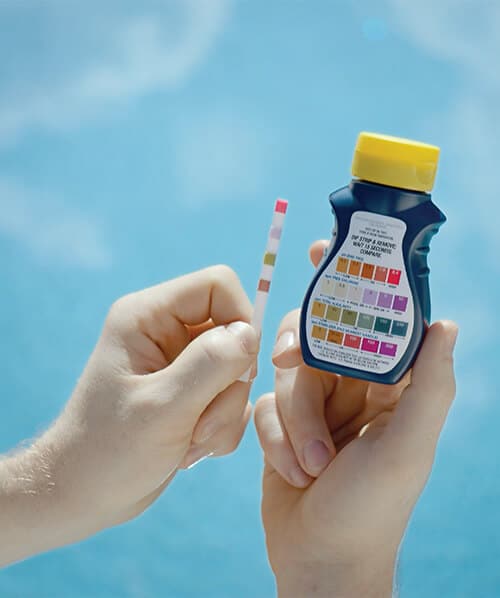
How to Test Pool Water Hardness
Testing calcium hardness should be part of your regular pool care routine, just like testing pH and chlorine.
Pro Tip: Test hardness every fortnight during summer or after adding chemicals. If you’re topping up frequently due to evaporation, test even more often.
Steps to Reduce Hardness in Pool Water
When calcium hardness climbs above 400 ppm, it’s time to take action.
Here’s a practical guide on how to reduce total hardness in pool water:


Tips to Prevent High Calcium Hardness in the Future
By taking proactive steps and following best practices, you can keep your pool in excellent condition and enjoyable for use.
Follow these key tips:
- Weekly testing: A quick dip with a test kit saves headaches later.
- Choose sanitisers wisely: Rotate away from calcium hypochlorite if you already have hardness issues. Liquid chlorine or salt systems may be better choices.
- Control evaporation: A pool cover reduces water loss and slows down mineral concentration.
- Filter maintenance: Backwash and clean filters regularly. A clean filter removes more contaminants, keeping calcium in check.
- Water replacement schedule: Plan to partially drain and refill every few years, even if hardness isn’t yet a problem.
Incorporate these steps into your pool routine, and you’ll prevent the need for emergency fixes later on.
FAQs
Keep Your Pool Balanced With Hy-Clor’s Range of Water Treatment Solutions
Now that you know how to reduce hardness in pool water and keep calcium levels under control, it’s time to put that knowledge to work. Keeping hardness in check doesn’t just protect your pool; it saves you time, reduces chemical costs, and keeps your water clear and inviting.
At Hy-Clor, we make pool care simple with a full range of specialty chemicals, balancers, and testing tools designed for Australian conditions.
Shop Hy-Clor’s pool care products online or stop by your local Bunnings Warehouse for a free water test today.