



On This Page
Testing Pool Alkalinity: A Key Step in Maintaining Healthy Swimming Pool Water
Chlorine and pH often get the spotlight, but there’s another factor working quietly behind the scenes: alkalinity.
Alkalinity acts as the backbone of water balance. When it’s out of range, it can trigger a chain of problems—from calcium deposits and premature wear on pool equipment to eye and skin irritation among swimmers.
This Hy-Clor guide explains what alkalinity is, why it matters, how to use a pool alkalinity test correctly, and the steps to maintain proper alkalinity in your pool. Whether you’re new to pool care or experienced with backyard maintenance, understanding alkalinity makes everything simpler.

What Is Pool Alkalinity and Why Is It Important?
Total alkalinity (TA) measures your pool water’s ability to neutralise acids. In simple terms, it acts as a stabiliser that keeps your pH from drifting too high or too low. Because pH shifts with rain, heat, debris, and even swimmers, alkalinity is what keeps those swings under control. When TA is within the proper range, pH stays steady. When TA is too low or too high, pH becomes unpredictable and much harder to manage.
This stabilising effect also protects your pool surfaces and equipment. When alkalinity is balanced, metal fixtures, plaster, vinyl, and filtration components are far less likely to corrode or develop scale.
Most pools perform best with TA between 80–120 ppm. Below 80 ppm, the water becomes acidic and unstable; above 120 ppm, it becomes resistant to adjustment and prone to scaling or cloudiness. Balanced alkalinity supports every other part of your water chemistry, making it one of the most important levels to watch.
What Happens When Alkalinity Is Too Low?
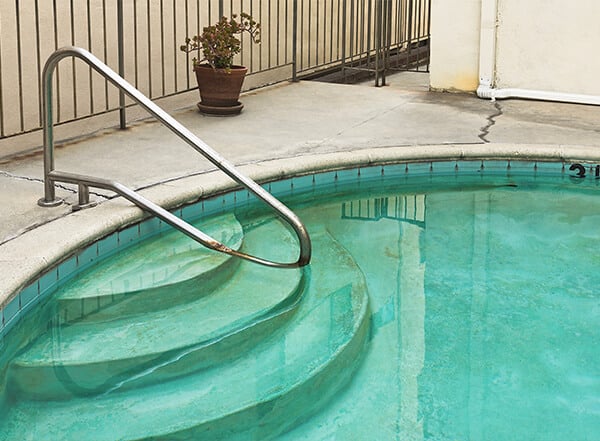
When alkalinity falls too low, the effects show up quickly—not just in your water chemistry, but in how your pool looks, feels, and functions. Common issues include:
- Rapid pH changes. Sudden swings disrupt your water balance and make the pool harder to maintain.
- Corrosion of metal components. Ladders, handrails, and heating elements are especially vulnerable.
- Etched plaster or grout. Unstable water can damage pool surfaces and affect the look and feel of your pool.
- Uncomfortable swimming conditions. Low alkalinity often results in itchy skin and burning eyes.
Reduced chlorine efficiency. When pH becomes unstable, chlorine can’t sanitise the water effectively.

What Happens When Alkalinity Is Too High?
When alkalinity climbs too high, the water becomes stubborn and difficult to balance. These symptoms often show up in both water quality and the condition of your pool:
- Cloudy, dull water. Excess buffering robs your pool of its usual clarity and sparkle.
- Calcium scaling. Mineral deposits build up on tiles, plaster, and equipment over time.
- A rising pH level. High alkalinity pushes pH upward, making it tough to keep in range.
- Difficulty adjusting water balance. The water becomes resistant to chemical changes, slowing down corrections.
- Increased acid use. Extra acid is needed just to bring levels back down, adding cost and effort.
Alkalinity sits at the centre of your pool chemistry, and when it’s balanced, everything else—chlorine, pH, clarifiers, calcium hardness—works the way it should. Keeping it within the ideal range prevents costly issues, protects your pool, and creates a safer, more enjoyable swimming environment for everyone.

Step-by-Step: How to Test Alkalinity in a Pool
If you’re learning how to test alkalinity in pool water for the first time, these steps will guide you through the process. The method is similar for test strips, liquid kits, and digital testers, with only small differences depending on the product you’re using.
How to Adjust Pool Alkalinity
Once you’ve completed your test, the next step is adjusting your alkalinity if it’s outside the ideal range. The process differs depending on whether your levels are too low or too high, but both are simple once you know the steps.
How to Raise Pool Alkalinity
If your alkalinity is below 80 ppm, your water doesn’t have enough buffering capacity. This can cause rapid pH swings and long-term damage to surfaces, grout, heaters, and metal fixtures.
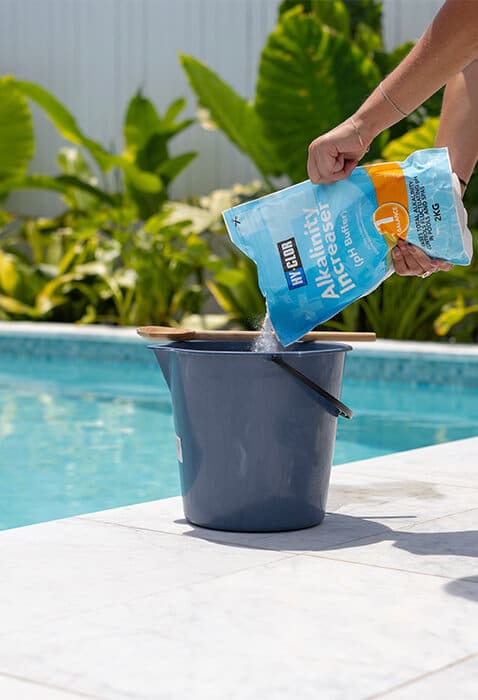
The easiest way to raise alkalinity is with sodium bicarbonate (baking soda). Pool-grade sodium bicarbonate from Hy-Clor dissolves quickly and provides consistent, predictable results.
Steps to raise alkalinity
- Calculate the correct dosage. Check the dosing instructions on the product label. Most dosing charts are based on 10,000 litres, making it easy to calculate how much your pool needs.
- Add the sodium bicarbonate evenly. Sprinkle the measured amount across the pool surface. Walking around the perimeter helps distribute it consistently. Keep the pump running to circulate it through the water.
- Let the pool circulate for several hours. This allows the bicarbonate to dissolve fully and start raising alkalinity.
- Retest after 24 hours. If the reading is still below 80 ppm, repeat the process using a smaller dose. Raising alkalinity slowly prevents overshooting and having to correct in the opposite direction.
Hy-Clor’s balancer chemicals provide clear instructions and dissolve efficiently, making adjustments easier and more predictable.
How to Lower Pool Alkalinity
If your alkalinity is above 120 ppm, the water becomes harder to adjust. High TA often causes pH to climb constantly, and it can also lead to cloudy water or calcium deposits on surfaces and equipment.
The most effective way to lower alkalinity is by adding muriatic acid or dry acid. These products lower both alkalinity and pH, so careful handling is essential.
Steps to lower alkalinity
- Dilute the acid safely. Fill a bucket with water and always pour the acid into the water — never the other way around. This minimises the risk of splashing and makes the mixture easier to distribute.
- Add the diluted acid near the return jets. Pour slowly and steadily. The return jets help push the acid throughout the pool, encouraging even distribution.
- Run the pump and allow the water to circulate. Let it run for several hours before retesting. This gives the acid time to lower both TA and pH.
- Retest alkalinity and pH. If TA remains high, repeat the process using a smaller dose. It’s best to make gradual adjustments and give the water time to stabilise between applications.
- Store and handle acid carefully. Keep it away from chlorine, metals, and direct sunlight. Always use gloves and eye protection when handling acid, and never mix it with other chemicals.
With the right technique, lowering alkalinity becomes a simple part of your routine — one that helps maintain comfortable water and protects your pool from scale buildup.
Tips for Maintaining Proper Pool Alkalinity
Once your water is in the 80–120 ppm range, the goal is to keep it steady. Stable alkalinity makes pool care easier—pH behaves predictably, chemicals work properly, and the water stays clearer and more enjoyable. These tips help you maintain balance with less effort.
- Test weekly and after weather events. Alkalinity can shift quickly. Rain dilutes the water, hot days increase evaporation, and wind blows in debris that affects chemistry. Weekly tests — plus extra checks after major weather changes — help you catch swings early.
- Keep an eye on pH trends. If pH keeps creeping up or dropping suddenly, alkalinity is often the reason. Ongoing pH drift is a strong sign that it’s time to retest TA.
- Avoid overusing chemicals. Too much chlorine, shock, clarifier, or stabiliser can shift alkalinity unintentionally. Follow dosing instructions carefully to avoid unnecessary corrections later.
- Use clarifiers and algaecides as needed. Debris and organic material can disrupt your chemical balance. Using clarifiers or algaecides when appropriate reduces strain on your filtration system and helps keep alkalinity steady.
- Keep circulation and filtration consistent. Good circulation spreads chemicals evenly and prevents pockets of high or low alkalinity. Running the pump for the recommended daily cycle supports stable water balance.
Use the Hy-Clor mobile app. The Hy-Clor app lets you track test results, store readings, calculate dosages, and receive personalised recommendations. It’s an easy way to maintain balanced alkalinity and pH year-round.

FAQs

Maintain Perfect Pool Water With Hy-Clor’s Alkalinity Solutions
Balanced alkalinity is the foundation of healthy, comfortable swimming water. With regular pool alkalinity tests, your pH stays steady, your chlorine works better, and your pool looks clearer and feels better.
Hy-Clor makes pool care simple. With easy-to-use testing kits, balancers, clarifiers, and sanitisers, you have everything you need to keep your water in great shape.
Want an even easier way to manage your pool?
Download the Hy-Clor mobile app for step-by-step guidance, chemical calculators, and tailored recommendations. You can also explore the Hy-Clor Learning Centre or browse the full range of pool care essentials.
With the right tools and a consistent routine, crystal-clear water becomes your everyday standard—not the exception.