
Chlorine Pool Maintenance: Essential Tips for Crystal-Clear and Sanitised Pool Water

One of the most frustrating things about owning a pool is how it can go from sparkling to swampy in what seems like the blink of an eye! All it can take is one hot week, a missed test, or a little chemical imbalance.

While chlorine does the heavy lifting in keeping pool water clean and safe, it’s still a team player, working best when the rest of your water is balanced too. Low chlorine, high pH, or poor routine care can all lead to problems.

A few simple habits can make a massive difference! We’re here to help you out with info on chlorine pool maintenance and other important weekly maintenance tasks so your pool stays clear, sanitised, and swim-ready.

Understanding the Role of Chlorine in Pool Maintenance

Chlorine works as a sanitiser by attacking and breaking down bacteria, viruses, and other contaminants. It also helps control algae before it spreads and turns clear water green, slimy, or cloudy.

Low chlorine can leave pool water looking dull or murky and make it harder to maintain overall water balance. On the other hand, excessively high chlorine levels can irritate swimmers’ eyes and skin, so getting the level right matters.

For most pools, the ideal chlorine level sits between 1 and 3 ppm (parts per million). Keeping chlorine within that range helps maintain clean, sanitised water and makes water quality problems and swimmer discomfort less likely.

Balancing Pool Water Chemistry

Keeping your pool clear isn’t just about adding chlorine to it. Chlorine, pH, and alkalinity all work together; when one is out of balance, the others can be affected too.

pH Levels

pH stands for “potential hydrogen” and is a measure of how acidic or alkaline pool water is.

Chlorine sanitises water best when the pH is within the right range. If pH gets too high, chlorine loses its power. If pH drops too low, the water can become harsh on swimmers and surfaces. Think itchy skin, irritated eyes, and pool surfaces or equipment that wear out sooner!

For most pools, the ideal pH range is 7.2 to 7.6. Testing your water regularly is the best way to stay on top of it. If pH is too low, use a pH increaser. If it’s too high, use a pH decreaser. If your pH keeps shifting, check total alkalinity as well and adjust that as needed before fine-tuning pH. Making small adjustments and retesting after each one can help you avoid overcorrecting.

Alkalinity

Alkalinity keeps pH steady. It’s the part of your pool water chemistry that helps stop pH from swinging up and down too quickly. When alkalinity is too low, pH can become hard to control. When it’s too high, pH can be harder to lower, which can also reduce how well chlorine works.

Water chemistry is a balancing act! Hy-Clor’s balancer chemicals make the process much easier.
Weekly Chlorine Pool Maintenance Routine

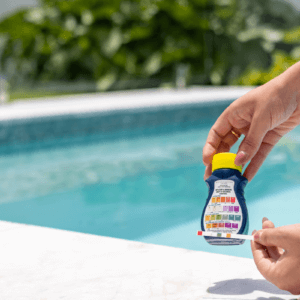
Use test strips or a liquid test kit to check your pool’s chlorine levels. Both are easy to use and will give you a quick read on whether your pool has enough sanitiser to keep the water safe and clear. Aim for a chlorine reading between 1 and 3 ppm.

Home testing at least once a week, and more often during hot weather or after heavy pool use, will help you catch problems early.

If your water looks off, weather or swimming conditions have changed, or you need guidance on balancing your pool water, more in-depth testing is a good idea. Just drop into a Hy-Clor or Bunnings store for a free test at a water testing kiosk, or download the free Hy-Clor water testing app.

If your pool’s chlorine level is too low, top it up using the type of chlorine your pool uses: tablets, liquid, or granules. Always follow the product directions, and add the right amount for your pool size so you don’t overdo it.

If the chlorine level is already too high, it’s usually best to wait and let it come down naturally. Once the level has had time to settle (anywhere from 2–24 hours), test the water again to check that it has returned to the ideal 1 to 3 ppm range.

Brush the pool walls, floor, and steps to loosen dirt, fine debris, and early algae build-up.

After brushing, vacuum the pool to remove any debris that has settled on the bottom.

Regular brushing and vacuuming help stop algae from taking hold, improve water circulation, and keep your pool looking cleaner between chemical treatments.

Your pool filter collects dirt, debris, and other unwanted bits from the water, so it needs regular cleaning to work properly. A clean filter also improves water flow and chlorine performance.

If you have a sand or DE filter, backwash it when needed to flush out built-up debris—usually every few weeks or when the filter pressure rises.

If you have a cartridge filter, remove the cartridge every 2 to 6 weeks, or sooner if water flow drops or the filter looks dirty, and hose it down according to the manufacturer’s instructions.

Add an algaecide during warm weather, after rain, after heavy pool use, or when the water starts showing early signs of algae growth.

If the water looks cloudy or dull, use a clarifier. Clarifiers bind tiny particles together so your filter can remove them more easily, improving water clarity.

Always follow the product directions for algaecides and clarifiers, and use them to support regular chlorine pool maintenance, not replace it.

Preventing Common Chlorine Pool Problems

So, when you hit that backwash valve, where does the water go when you backwash a pool? The answer depends on your setup and local regulations.

Cloudy Water

Cause: High pH
Solution: Test the water and use a pH reducer to bring it back into the ideal 7.2 to 7.6 range. When pH is too high, chlorine cannot work as effectively, which can leave the water looking cloudy.

Cause: Low or insufficient chlorine
Solution: Test the chlorine level and add more if needed to bring it back to the ideal 1 to 3 ppm range. If the water is particularly cloudy, a shock treatment may also help.

Cause: Early stages of algae growth
Solution:
Brush the pool surfaces, shock the water, and keep the chlorine level in range. An algaecide can stop algae from spreading further.

Cause: Poor filtration
Solution: Run the filter long enough each day, and clean or backwash it as needed. A dirty or underperforming filter can struggle to remove the particles that make water look cloudy.

Cause: Fine debris
Solution: Vacuum the pool, clean the skimmer basket, and use a clarifier to help the filter trap smaller particles.

Algae Growth

Cause: Poor water circulation
Solution: Run the pump long enough each day, check that the return jets are moving water properly, and brush steps, corners, and behind ladders where algae can easily build up.

Cause: Warm weather, rain, and debris build-up
Solution: Remove leaves and debris, test the water more often, and stay on top of brushing and filtration. An algaecide can stop algae from taking hold during higher-risk periods.

Chlorine Loss

Cause: High sunlight exposure
Solution: Strong sunlight can break down chlorine faster. Test the water more often during sunny weather and top up chlorine as needed. A stabilised chlorine product can also help protect chlorine from breaking down too quickly in the sun.

Cause: Heavy pool use
Solution: More swimmers mean more sweat, sunscreen, body oils, and other contaminants for chlorine to deal with. Test the water after busy weekends or pool parties, and add more chlorine if levels have dropped. A shock treatment can also help.

When and How to Shock Your Pool

Shocking a pool means adding a high dose of chlorine to quickly address issues that regular chlorine can struggle to keep up with. Shocking kills bacteria and algae, breaks down organic contaminants such as sweat, sunscreen, and body oils, and can resolve cloudy water, a chlorine smell, and eye irritation.

You should shock your pool as part of regular chlorine pool maintenance, and after heavy rain, algae growth, very low chlorine, or a busy weekend with lots of swimmers.

Here’s how to shock a chlorine pool:

Shock in the evening or at night, as strong sunlight can break down chlorine faster.
Check your chlorine and pH, getting pH into the 7.2 to 7.6 range so the chlorine can work properly.
Use a pool shock product suitable for chlorine pools, and follow the dosage on the pack for your pool size.
Add the recommended amount of product to a bucket of water and stir until it dissolves completely.
Pour the mixture around the perimeter of the pool to spread it more evenly through the water. Application method can vary by pool surface and product type, so follow the label.
Keep your pump and filter running for at least 8 hours so the shock treatment can circulate through the pool.

After 8 hours, test the water again and wait until chlorine drops back to the normal safe range of 1 to 3 ppm before swimming.

Choosing the Right Chlorine Products for Your Pool

Different chlorine products suit different pool care needs.

  • Tablets: Easy to use and slow-dissolving, making them a good choice for steady, ongoing chlorination.
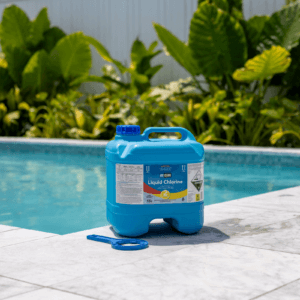
  • Liquid Chlorine: Fast-acting and ideal for lifting chlorine levels quickly.
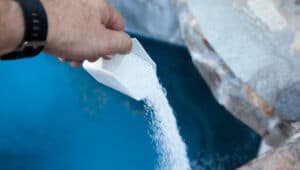
  • Granular Chlorine: A flexible option for regular chlorine pool maintenance or shock treatments, depending on the product.

Hy-Clor’s chlorine sanitisers make it easier to keep pool water clean, clear, and properly sanitised.

FAQs

It depends on the chlorine product you use, the weather, and how often the pool is used, but as a general rule, chlorine should be checked at least weekly and topped up as needed to keep levels between 1 and 3 ppm.
Test strips or a liquid test kit will give you a quick reading of a pool’s chlorine level. For a more detailed check, you can use a professional water-testing kiosk at stores such as Bunnings.
Chlorine can drop quickly due to strong sunlight, heavy pool use, rain, algae, or a build-up of dirt, leaves, sunscreen, and body oils. Low stabiliser levels can also make chlorine break down faster in outdoor pools.
Test your pool water regularly and adjust chlorine to keep it between 1 and 3 ppm. It also helps to keep pH and alkalinity in range, because chlorine works best when the rest of the water is balanced too.
It’s best to avoid swimming if chlorine is above the recommended range, as high levels can irritate the eyes, skin, and airways.
Chlorine tablets are slow-dissolving and better for steady, ongoing sanitising, while liquid chlorine works quickly and is better for fast adjustments or shock treatments. Tablets are more convenient for regular maintenance, while liquid chlorine is handy when you need to raise chlorine levels quickly.

Keep Your Chlorine Pool Crystal-Clear with Hy-Clor’s Expert Solutions

A sparkling pool doesn’t happen by luck. It comes from keeping chlorine levels in check, balancing your water, and staying on top of the small jobs before they turn into bigger ones.

A simple weekly routine, along with the right chlorine products, equals a pool that’s clean, clear, and ready for a dip instead of a rescue mission!

Hy-Clor’s range of chlorine sanitisers, balancer chemicals, and pool care equipment will keep your water in great shape with less guesswork.

For more handy pool care tips, explore our Learning Centre and videos, contact us for personalised advice, or head into Bunnings to use a free Hy-Clor water testing kiosk.