

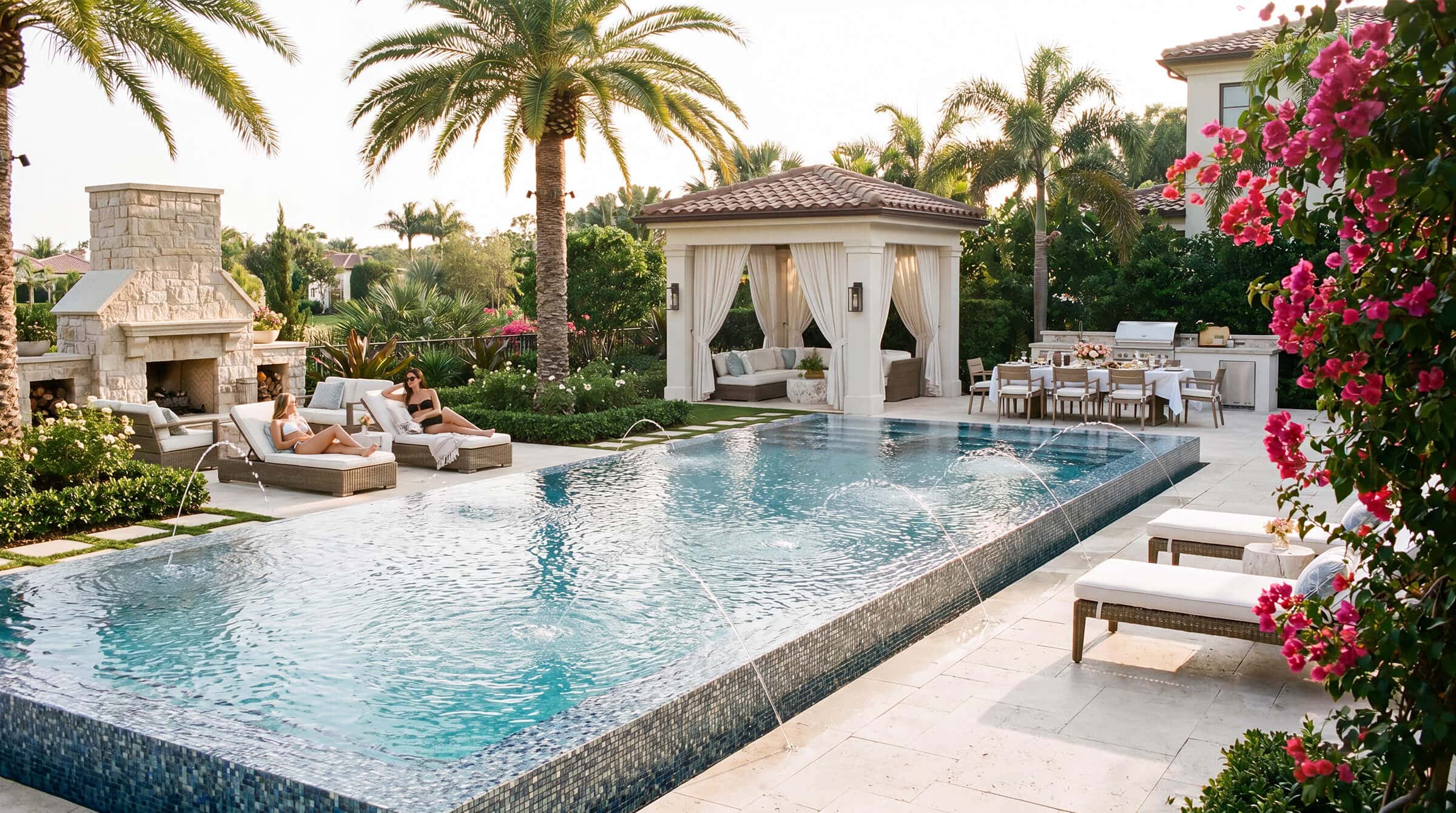
Pool Chlorination: Everything You Need to Know for Sparkling Clean Water

The Role of Pool Chlorination in Keeping Your Water Clean and Inviting

Chlorine is the magic ingredient every pool needs to stay in swimmable shape. It’s the difference between wanting to dive right in and thinking “ahhh…maybe not”!

Chlorine is not a guessing game; you can’t just chuck it in your pool and hope for the best! Using pool chlorine correctly is something we’ve got down to a fine art. And we’re here to share our secrets with you!

We’ll cover the main types of pool chlorination, the benefits of maintaining balanced chlorine levels, and simple maintenance tips to keep your pool swim-ready.
What Is Pool Chlorination?

Pool chlorination is the process of adding chlorine to pool water to keep it clean, safe, and healthy. Chlorine is one of the main chemicals used in pool maintenance because it helps kill bacteria, control algae, and break down unwanted contaminants introduced by swimmers, rain, leaves, dust, and debris.

Chlorine works by releasing a sanitising agent into the water called hypochlorous acid. Once active, it attacks bacteria, algae, and other contaminants, stopping them from growing and spreading through the pool.

Types of Pool Chlorination Methods
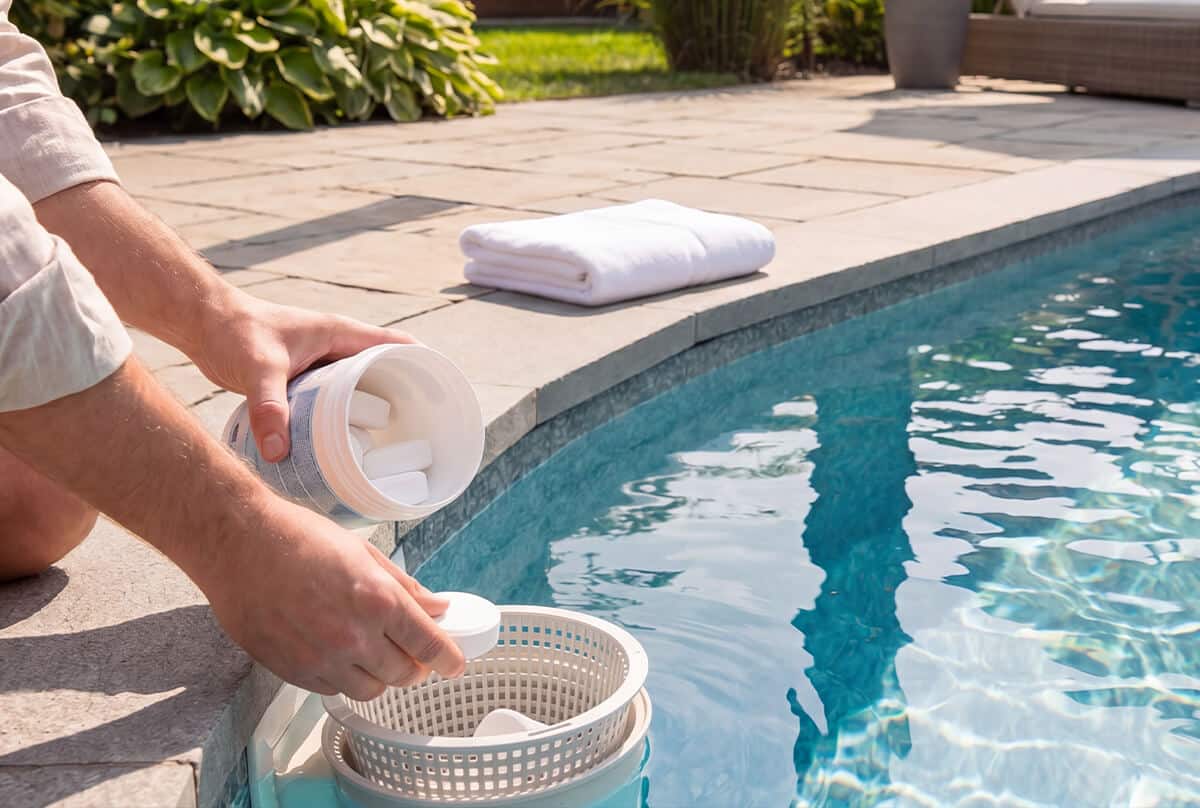
You can add granular, liquid, or tablet chlorine to your pool by hand, depending on your pool type, maintenance routine, and the product instructions.

Granular chlorine is usually dissolved or added directly to the pool water; liquid chlorine is poured into the water; and tablets are placed in a floating dispenser, chemical feeder, or suitable chlorinator.

Pros:

  • Simple to use, widely available, and affordable
  • Easy to adjust based on water test results
  • Good for routine sanitising, shock dosing, or correcting low chlorine levels

Cons:

  • Requires regular testing and manual dosing
  • Chlorine levels can rise and fall more noticeably between doses
  • Overdosing or underdosing can affect water balance and swimmer comfort
  • Some products need careful handling, storage, or pre-dissolving before use

Automatic chlorinators and chemical feeders gradually release chlorine into pool water. Instead of manually adding chlorine each time, you load the feeder with a suitable chlorine product, such as tablets or sticks, and the system doses the water as it circulates through the filtration system.

Some feeders are installed in-line with the pool plumbing, while others sit off-line or work as floating dispensers.

Pros:

  • Keeps chlorine levels more consistent
  • Reduces the need for frequent manual dosing
  • Convenient for busy pool owners and caretakers
  • Can be adjusted to suit pool usage, weather, and water test results
  • Useful for maintaining sanitiser levels between regular pool checks

Cons:

  • Still requires regular water testing and adjustment
  • Needs to be refilled with the right chlorine product
  • Incorrect settings can lead to too much or too little chlorine
  • Some systems may need installation, maintenance, or replacement parts

Saltwater pools still use chlorine. The difference is that the chlorine is produced automatically from salt, rather than being added manually as liquid, granules, or tablets.

A salt chlorinator turns dissolved pool salt into chlorine. The pool water passes through a salt cell, where an electrical process converts the salt into a sanitising form of chlorine.

Pros:

  • Produces chlorine automatically while the system runs
  • Can provide more consistent sanitising with less manual dosing
  • Often feels softer and gentler on the skin and eyes than traditional chlorine pools
  • Reduces the need to store and handle some chlorine products
  • Convenient for regular pool maintenance

Cons:

  • Higher upfront cost for the salt chlorinator system
  • Salt cells need cleaning, maintenance, and eventual replacement
  • Still requires regular water testing and balancing
  • Chlorine output may need adjusting during hot weather or heavy pool use
  • Salt levels must be maintained for the system to work properly

Key Benefits of Pool Chlorination

  • Clean and Safe Water:
    Chlorine kills bacteria, germs, and other unwanted contaminants, keeping your pool water healthier and safer for swimming.
  • Prevents Algae Formation:
    Balanced chlorine levels help stop algae from growing, so your pool is less likely to turn green, cloudy, or slippery.
  • Affordable and Effective:
    Chlorine is reliable, readily available, and cost-effective for everyday pool sanitisation.
  • Adjustable to Pool Needs:
    Chlorine levels can be adjusted based on your pool size, weather, swimmer load, and water test results, giving you better control over water quality.

Step-by-Step Guide: How to Chlorinate Your Pool Properly
Use a water-testing kit or test strips from Hy-Clor to test your pool’s chlorine, pH, alkalinity, and calcium hardness levels. For most pools, the ideal free chlorine level is generally 1–3 ppm.
Adjust your water before adding chlorine so it can work properly. Use a Hy-Clor pH increaser or decreaser to bring pH into the recommended range. Then, check total alkalinity. If it’s too low, add an alkalinity increaser; if it’s too high, use a pH decreaser or acid-based product as directed. Calcium hardness may also need adjusting if your water is too soft or too hard. Always add chemicals one at a time, follow the product label, run the pump, and retest before moving on.
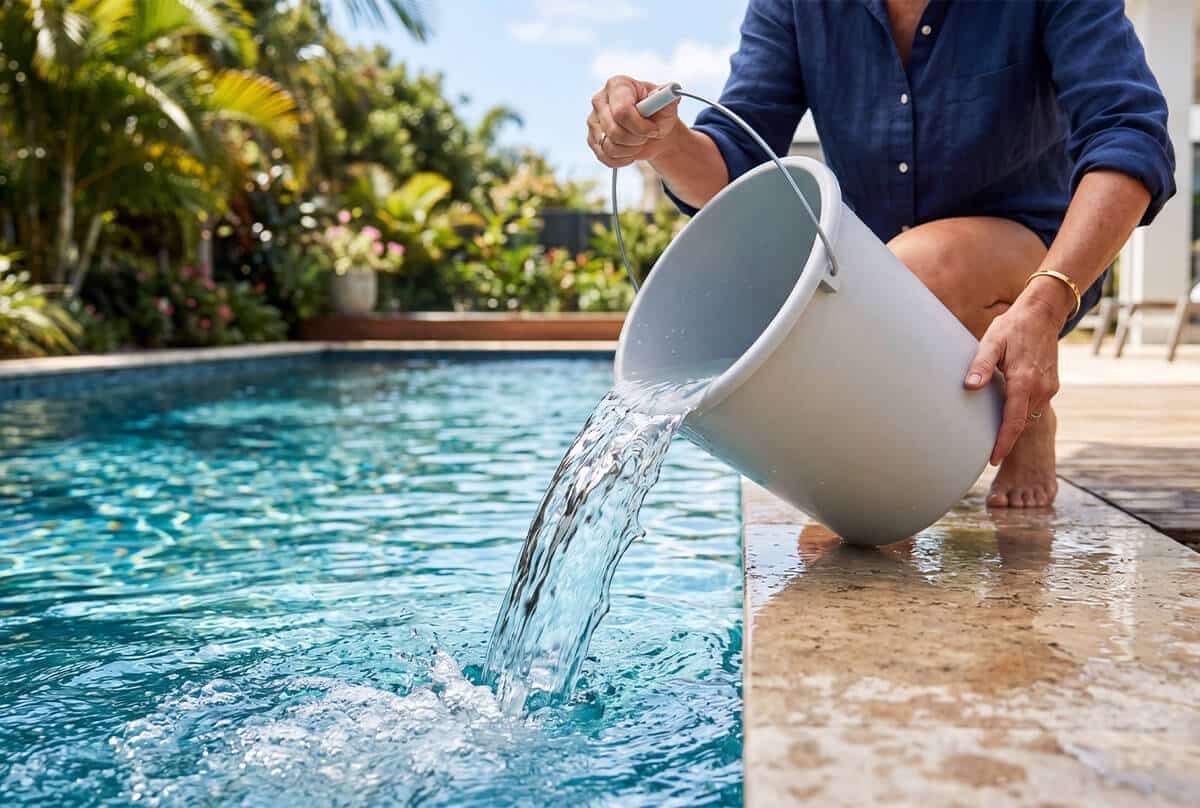
Choose the chlorine product that suits your pool: liquid, granular, or tablets. To know how much chlorine to add to your pool, follow the product label’s dosage instructions.
Keep the pool pump running after adding chlorine to circulate it evenly throughout the pool.
Test your chlorine levels 2–3 times a week and daily during hot weather, after heavy rain, or when the pool has had many swimmers. Add more chlorine if levels are low, and always follow the product label.

Shock treatment removes contaminants and chloramines, which can cause cloudy water and strong chlorine smells. It’s often needed after heavy use, in bad weather, or when algae grows.

Brush the walls and floor, skim debris, and clean your filter regularly. Good cleaning helps chlorine work more effectively and reduces algae buildup.

Troubleshooting Common Pool Chlorination Problems

Caused by low chlorine, poor circulation, dirty filters, unbalanced pH, or fine particles in the water. Test the water first, balance pH and chlorine levels, clean the filter, and run the pump.

Chlorine Odour

Caused by chloramines in the water, which form when chlorine reacts with sweat, oils, sunscreen, and other contaminants. Shock the pool, check chlorine levels, and keep the water properly balanced.

Chlorine Loss

Chlorine can quickly dissipate in hot weather, under strong sunlight, during heavy rain, or after lots of swimming. Low stabiliser levels can also cause chlorine to break down faster. Test more often during these conditions and adjust chlorine as needed.

Can appear when chlorine levels are too low, circulation is poor, or pool surfaces are not cleaned regularly. Brush the walls and floor, shock the pool if needed, clean the filter, and keep chlorine levels in the recommended range.

FAQs

Pool chlorine kills bacteria, controls algae, and breaks down contaminants like sweat, sunscreen, leaves, and other organic matter that can build up in the water.
Test your pool chlorine levels 2–3 times a week during normal use, and add chlorine as needed to keep them within the recommended range. During hot weather, after heavy rain, or after lots of swimming, you may need to test and chlorinate more often because chlorine gets used up faster.
Too much chlorine can irritate the eyes, skin, and airways and may also fade swimwear or damage pool surfaces and equipment over time.
Without chlorine or another approved sanitising system, bacteria, algae, and other contaminants can build up quickly, making the water unsafe for swimming.
It depends on the chlorine product and dosage, so always follow the label. As a general guide, wait at least 30 minutes to a few hours after regular chlorination, with the pump running to circulate the water. Only swim once the chlorine has fully mixed and the water tests within the safe range, typically 1–3 ppm.
Chlorine tablets dissolve slowly and are often used in floating dispensers, feeders, or automatic chlorinators to maintain chlorine levels over time. Liquid chlorine acts faster and is usually poured directly into the pool to raise chlorine levels quickly. Tablets are convenient for ongoing maintenance, while liquid chlorine is handy for quick dosing or larger adjustments.

Ensure Sparkling Water with Hy-Clor’s Pool Chlorination Solutions

Pool chlorination keeps your pool from becoming a very expensive pond! With the right chlorine routine, your water can stay clear and ready for a swim anytime.

At Hy-Clor, we have everything you need to look after your pool: chlorine, balancer chemicals, and pool care equipment.

For more handy pool care tips, explore our Learning Centre and videos, contact us for personalised advice, or head into Bunnings to use a free Hy-Clor water testing kiosk.